
How to Make Child Therapy Work
Consider a child who is having persistent and outsized emotional reactions at home, a common concern that we hear about. The child might be overly anxious and distressed, or responding to everyday demands with anger and emotional dysregulation. Family life is impacted, and parents may feel at a loss. In such cases, the family may seek a child therapist to help the child develop tools to manage emotions. On the surface, this makes a lot of sense.
And yet, if we work only with the child, we risk missing the bigger picture.
When the child's problems are the signal
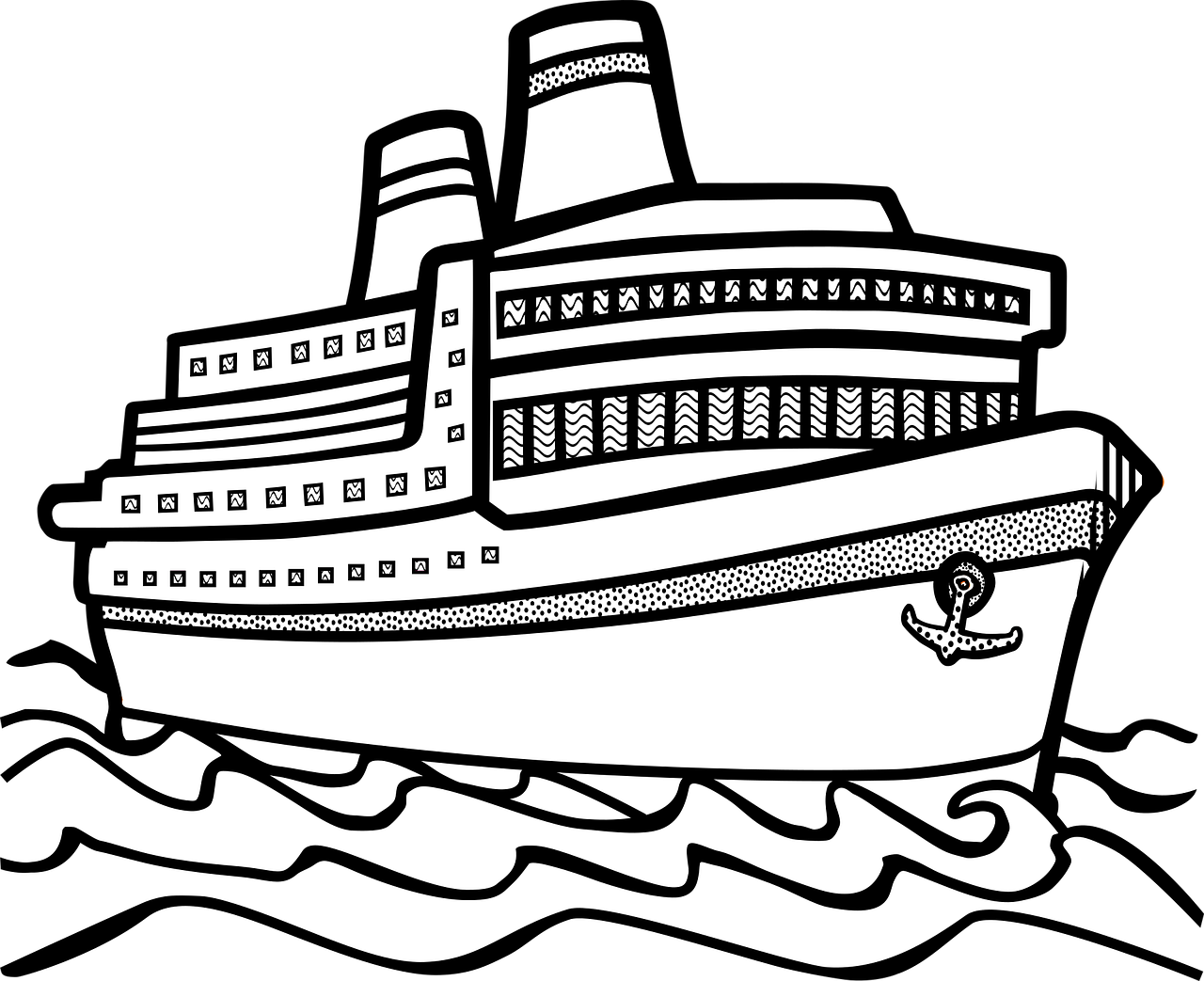
Imagine a large ship with a crack in its hull. The hull is the outer shell, the structure that keeps water out and everyone afloat. A crack in the hull is usually silent. It is often below the waterline, invisible from aboard while the ship quietly takes on water.
When the water rises from within the ship, an alarm goes off. The siren is doing exactly what it is supposed to do: signal that something is wrong below the ship’s waterline. The noise signals that we need to explore why the alarm is going off.
A child's anxiety, defiance, or meltdowns can work the same way. In many cases, a child who is struggling is responding to stress in their environment. They cannot point to where the "crack" is, but their behavior and emotions signal that something is wrong beneath the surface. The only way to address the child’s distress in the long term is to address the child’s broader context. The primary goal of any child therapy is to improve the child’s long term mental health outcomes.
Children live inside nested worlds
In the 1970s, developmental psychologist Urie Bronfenbrenner introduced the concept of children wrapped in nested environments. His ecological systems model maps those environments from the inside out. Family, peers, and school life directly impact the child, which are in turn affected by parents' workplaces, the neighborhood, and media. The broader cultural values and historical era also shape development. Everything is connected. A stressor in any layer can ripple inward and show up in the child at the center.
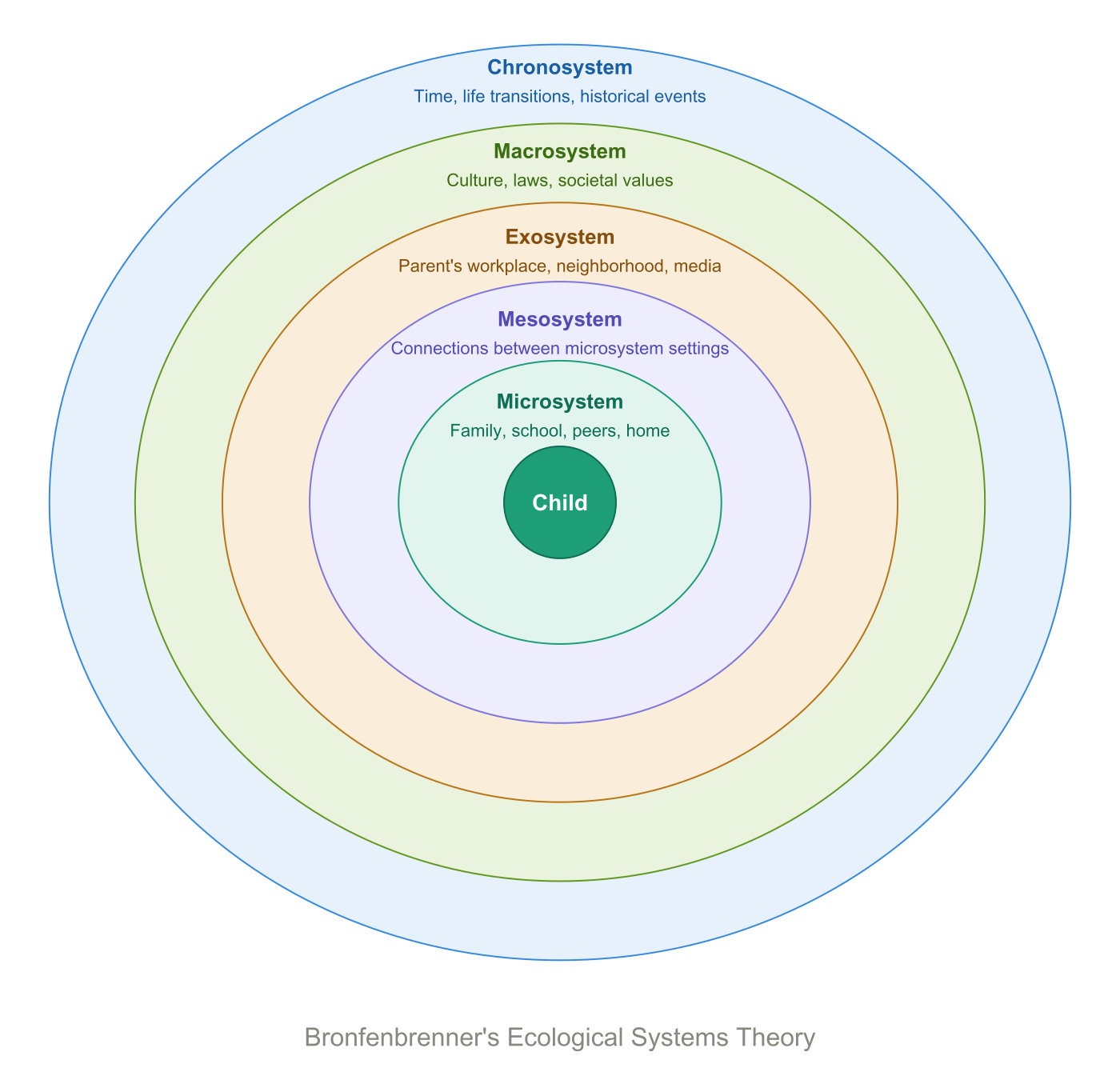
A child cannot be fully understood or helped without understanding the world they are living in. The child and context are inseparable. This is not just a theory. It is one of the most well-supported ideas in the science of child development.
History, history, history
There is an old clinical mantra: history, history, history. The history is where a fuller picture emerges. Treatment manuals only go so far. To design a treatment that gives a child the best chance at long-term mental health, we need to understand the nested contexts. This means learning as much as we can about home life, siblings, school, and the child's social world. We want to understand how the caregivers are doing, what stresses the parents are carrying, and, for households with more than one adult, the quality of the relationship(s). We want to know about the family’s cultural backgrounds and how the parents themselves were raised. We also want to understand the presence and impact of intergenerational trauma, and how world events are affecting the family today.
The transactional nature of development
A child arrives in the world with their own variation of temperament. The child may have neurodevelopmental or medical vulnerabilities. The child’s characteristics shape how the child experiences the environment, and how the people in that environment respond to the child. Over time, these interactions accumulate and become the conditions of development itself. This back-and-forth between child and environment is what researchers call the transactional model of development, and it means that neither the child nor the environment alone tells the whole story.
Consider a child who comes into the world with a tendency to become easily frustrated. This child may be more difficult to soothe, more reactive at home, and more likely to struggle in school. Adults find themselves often needing to correct this child, and that their own patience is being tested. The child picks up on that tension and becomes more dysregulated. The environment grows more reactive, and so does the child. What started as a biological tendency becomes a pattern shaped by both the child and everyone around them.
Making child therapy work

While we cannot rewrite history or change the broader societal context, we can give meaningful attention to a child's micro- and mesosystems. Addressing strains within the family or stress at school can be transformative. This might involve teaching parents new skills to support their child's emotional life at home, advocating for changes in the school environment, or helping caregivers get support of their own. Home life can shift. A child's educational needs can be addressed. Systems can change. And when these things happen, children often improve in ways that no amount of individual therapy alone could have produced.
This work is more complex than the drop-off model of child therapy, and more powerful. Examining family relationships, family culture, and the school environment can feel challenging. Painful emotions come up: fear, shame, grief, anger, embarrassment. Whether the changes involve small adjustments in how a family responds to their child or a fundamental shift in understanding what that child needs, it is our job to guide families with compassion, understanding, and committment.
Mental health services at Child and Teen Solutions (CATS) in Seattle
At CATS, we offer therapy for children and teens, and parents. We also offer comprehensive neurodevelopental evaluations. As part of our broader therapy and evaluation services, we offer a specialty focus for young children.
Learn more at www.childandteensolutions.com, or reach out through our Contact page.