
From Upset to Nuclear Meltdown: The "Big Three" Escalation Triggers Every Parent Should Know

Every parent knows their child’s triggers to upsets. Common causes of distress include:
Leaving the house
Getting ready for bed
Bathing/teeth brushing
Mealtimes
Being told “no”
Sibling conflict
Transitions
Things not going as expected
Among children who are easily upset, some calm quickly after the initial outburst. Others, however, have more persistent and vigorous responses. It can be hard for these children to let things go and move on with the day. In these situations, parents can end up feeling exasperated and helpless. In an effort to contain the situation, parents may resort to certain responses that kick an already difficult episode into a nuclear state of dysregulation. Parents of children with emotional intensity know what this looks like - physical aggression, uncontrolled screaming/crying, and destructive behavior.
Physiology - “Slow Return to Baseline”
When a child becomes upset, their body shifts into a stress response. The amygdala, the brain's alarm system, takes over. Meanwhile, the prefrontal cortex, the part responsible for reasoning, shuts down. In this state, a child cannot think their way out of the upset. Logic, negotiation, and consequences simply cannot be processed the way they can when a child is calm.
For some children, this activated state passes quickly. Within a minute or two, their body settles and the prefrontal cortex comes back online. But for other children, especially those who are more sensitive or reactive by temperament, the nervous system takes much longer to settle. This is known as a slow return to baseline. The body may stay flooded with stress hormones for relatively longer periods, even after the original trigger has passed. After a big upset, some children remain emotionally fragile for the remainder of the day and continue to be easily set off.
Children with sensitive temperaments are not choosing to stay upset. It’s their physiology. Any attempt to reason, correct, or manage them during this window is asking their brain to do something that it cannot do. During a child upset, it’s normal for parents to feel their own emotions rising - often out of a sense of worry, helplessness, or frustration. This is when the Big Three tend to happen. Understanding this dynamic can help to avoid certain parent responses that, however well intentioned, tend to make things worse.
The Big Three Triggers to Nuclear Meltdowns
I have listened to countless stories of child upsets, ranging from brief outbursts to severe and prolonged emotion dysregulation. When understanding dysregulated child behavior, it’s important to walk step-by-step through the sequence of events that led to the escalation. In most cases, the event that set things off into next level child distress falls into one of these three buckets:

Taking away a tech device during a conflict
You’ve told your child eight times to put away their iPad and things are getting heated. Perhaps it’s dinner time or you need to leave the house now or you’ll be late. Out of frustration, you take the device out of your child’s hands. The situation goes nuclear.
Physically Intervening
Your child is not listening to you or is being disruptive. Perhaps it’s a sibling argument - tempers are flaring and the kids are refusing to separate. You pick up the more escalated child to bring to a room time out. The child gets even more upset, striking out aggressively on the way to their room.
Issuing a consequence
Despite your best efforts to redirect your upset child, the situation is not resolving. In an effort to get through to your child and gain cooperation, you threaten that your child can’t go to their friend’s sleepover the next day. When your child does not respond as hoped, you tell your child that they’ve now lost the privilege of going to the sleepover. Your child becomes enraged and the day gets derailed.
A Fourth Trigger - When Parents Stop Giving In
This fourth trigger needs special mention because it is based on a skilled parent response - as opposed to the Big Three, which are best to avoid. When parents stop giving in order to set limits and provide consistency, their child is likely to escalate. If a child has learned that badgering, crying, or arguing might eventually wear a parent down, then holding the line often produces a bigger reaction. This is known as an extinction burst. In an extinction burst, the child escalates as a way of testing whether the old pattern still works. This increased intensity usually indicates that the parent is doing the right thing by not reinforcing negative behavior.
Your Most Powerful De-escalation Strategy
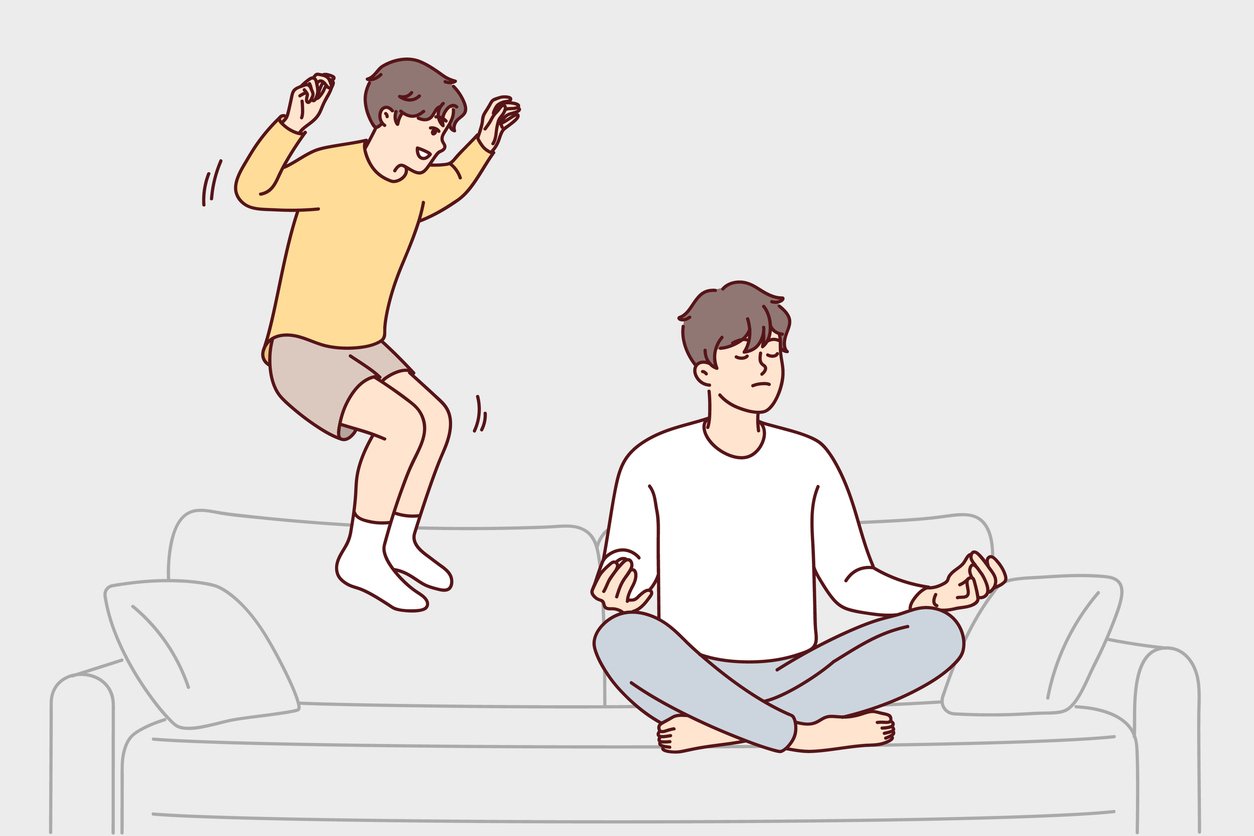
Children need to borrow their caregiver’s regulation before they can find their own. All too often though, a child's dysregulation is contagious. When a parent's own nervous system activates (raised voice, tension), the child's system escalates further. Often, our work with families involves teaching skills that parents can use to keep themselves reasonably regulated - even when their child’s behavior is distressing.
Staying regulated yourself is the foundation. From there, a few other strategies can help reduce the frequency of dysregulated meltdowns.
Other Strategies that Work to Reduce Meltdowns
After a child becomes escalated, the best course of action for parents is usually to disengage as much as possible. This will help to avoid 1) reinforcing the disruptive behavior, and 2) adding fuel to the fire. This is not easy and requires working preemptively on a plan of what this will look like. The specifics will need to vary depending on the family, the child, and each situation. As part of this plan, we often look to understand how the disuptive behavior is functioning and teach the child more adaptive ways get needs met.

It’s much easier to head off upsets than it is to manage them after a child is set off. Usually, parents have an idea of the kinds of situations that tend to create problems for their child. Averting ongoing recurrences often involves one or more strategies such as making shifts in the environment, building skills, and reinforcing prosocial/ desired behaviors. The use of punishment and consequences can be helpful, but only if used in ways that are predictable and reasonable. Although mild punishments can be productive, it’s easy for caregivers to fall into traps that only make things worse. Often, it’s possible to troubleshoot situations in ways that avoid punishment entirely. For example, parents can proactively have systems in place that help with screen time limits. Ultimately, we want to combine a range of strategies that we know will help the child build better self-regulation.
Parenting Services at Child and Teen Solutions
Located in Seattle, we coach parents on how to support their child or teen in building the kinds of skills that are needed to improve homelife and mental health. In our work with parents, we build the kinds of road maps that help to reduce meltdowns. We specialize in a broad range of child profiles, including anxiety, ADHD, and autism. We treat anxiety, depression, and emotion dysregulation. We also provide comprehensive evaluations for children, teens, and young adults.
To learn more, reach out to us through our Contact Page.
And if you like what you’ve read, sign up for the Parenting Tips Newsletter.