
Does Your Child Need "Someone to Talk To"? What the Research Actually Says About Child Therapy

Parents want the best for their children. Finding a therapist for their child feels like the right thing. Social media, schools, and even doctor’s offices often reinforce the idea that a struggling child needs "someone to talk to." A professional, neutral adult. A "safe space" outside of the family. This implies that parents should be on the sidelines while someone else does the work of healing their child.
We feel that this messaging warrants some pushback. Talking to a caring professional absolutely helps, especially in the short term. But the research on what creates lasting and positive change tells a very different story than the one that parents keep hearing.
The Cultural Script vs. the Clinical Evidence
Here is the script that many parents have absorbed: Children who are having emotional or behavior problems need their own therapy sessions in order to get better. Parents can expect to drop their child off at weekly therapy, and the child will work through feelings and learn tools to improve coping, behavior, and self-esteem.
This stands in contrast to what decades of child clinical research actually shows. For most common childhood struggles, the caregiver is not a bystander in treatment. The parent is the main driver of change. Nearly every evidence-based treatment for child mental health problems includes parent involvement. In fact, many of the most effective approaches work primarily through the parent, rather than the child. There is remarkably little evidence that individual child therapy on its own leads to lasting improvement. Kids do feel better after talking to someone who listens and validates. But don’t we also want children to feel similarly supported by their parents? Lasting mental health resiliency is best accomplished by treating the family system. Parents are in a much stronger position to support their child’s mental health as compared to a therapist who sees the child for one hour per week.
Child Problems that Require Parents in the Therapy Space
- Aggression
- Tantrums
- Defiance
- Irritability
- Depression
- Low self-esteem
- Low frustration tolerance
- Emotion dysregulation
- Anger control problems
- Disruptive behavior
- Bedtime challenges
- Mealtime issues
- Screen overuse
- Trauma
- Anxiety / OCD
- Self-harm
- Suicidality
- ADHD
These challenges require family support and opportunities for the child to build skills in the context of everyday interactions. Parenting sessions teach caregivers how to build and reinforce more adaptive coping in their child. Instead of feeling lost about how to respond to their child’s worrisome behaviors, parents can build confidence as they learn about how to support their distressed child. Direct work with parents is often at the core of treatment. Child sessions serve as an adjunct to strengthen outcomes. Most of our most well regarded interventions place parents at the center of treatment. Parent-Child Interaction Therapy (PCIT) coaches parents in real time to reduce disruptive behavior in young children. The Incredible Years offers parenting skills for managing defiance and aggression. Parent Management Training (PMT, also known as the Kazdin Method) and Triple P (Positive Parenting Program) both teach structured parenting skills aimed at changing behavior. Dialectical Behavior Therapy for Children (DBT-C) teaches emotion regulation to the child only after the parents have mastered their own emotion regulation skills. In DBT-C, parents are seen for weeks or even months prior to direct work with the child.

Getting to know the child, of course, also matters immensely. Neurodevelopmental, behavioral, and/ or mental health helps to customize the intervention. Many children will benefit from direct services, often with a parent in the room with the child. This way, the family is working collaboratively to support the child’s emotion regulation skills. For example, anxiety, obsessive-compulsive disorder, suicidality, self-harm, depression, and trauma are usually best served using a hybrid approach. Parents remain essential participants. SPACE (Supportive Parenting for Anxious Childhood Emotions), for example, is built entirely around this idea. SPACE treats child anxiety by working with parents to reduce the accommodations that unintentionally maintain the anxiety. Trauma-Focused Cognitive Behavioral Therapy (TF-CBT), for example, also includes parents as integral to the child’s treatment.
Teens need this family lens too. When emotion dysregulation, suicidality, or family conflict is in the picture, a parent or family component is absolutely essential. For example, Attachment-Based Family Therapy (ABFT) for adolescent depression focuses directly on the parent-teen relationship as the core mechanism of healing. Dialectical Behavior Therapy for Adolescents (DBT-A) teaches parents skills alongside the teen's own sessions. This two-pronged approach helps the family to better regulate as a whole, and supports the teen’s own skill building. We would argue that parent involvement is needed even for young adults who are grappling with emotion dysregulation, self-harm, or family conflict.
An Illustration of the Evidence
Both longitudinal and meta-analytic studies highlight the life-changing impact that parenting interventions can have on children.* Young children who show mental health vulnerabilities enjoy long-term benefits when their caregivers receive parenting interventions. The well-established parenting interventions have an especially protective impact on the most vulnerable children. In fact, children with difficult predispositions benefit immensely when their parents learn tools for how to respond to challenging behaviors. These are children who have an inborn tendency to struggle with self-control. In other words, parents are not to blame for their child’s difficult behavior - and at same time, parents hold the keys for improving their child’s self-regulation. These studies also show that it’s never too late for parents to make changes that will improve their child’s mental health.
Why the Confusion Persists
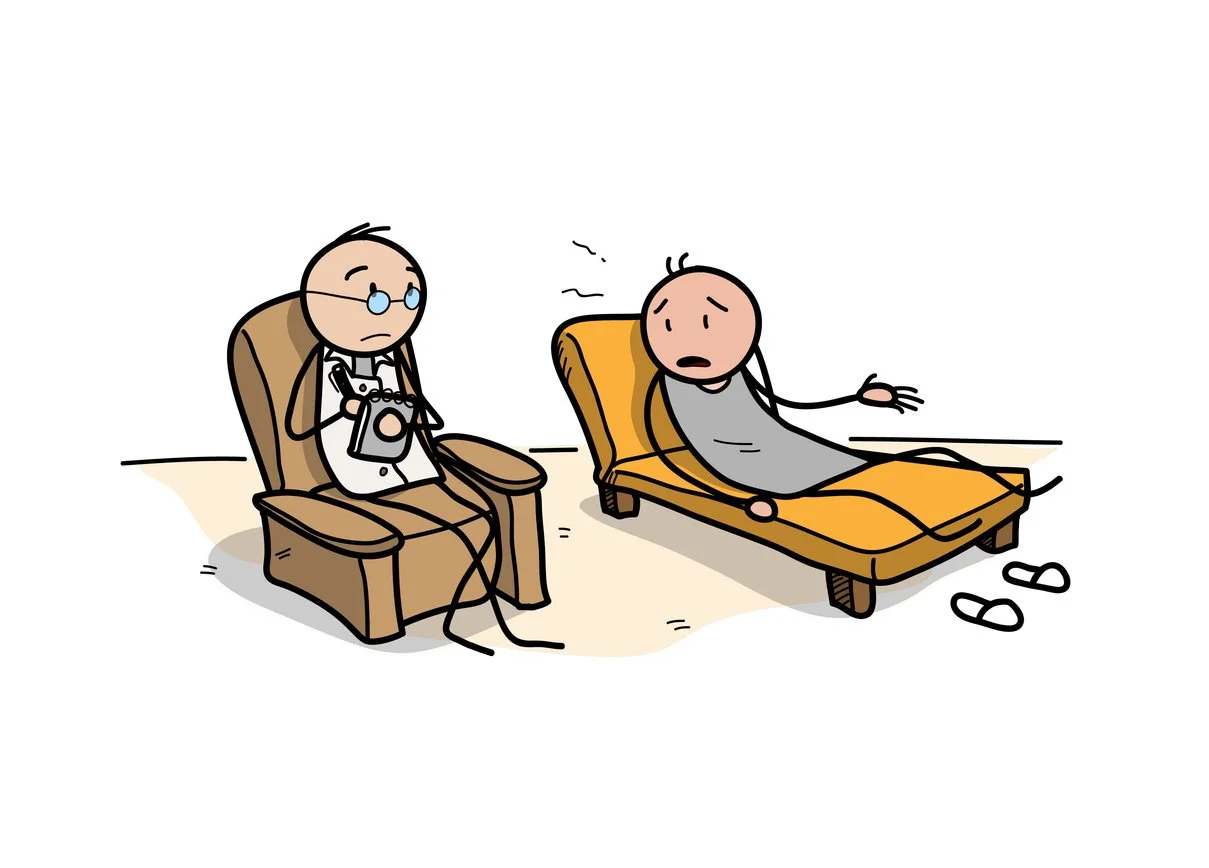
None of this is debated in the research literature. So why does "Your child needs someone to talk to" dominate the cultural conversation? Part of this comes from history. The child therapy field grew out of a tradition built on individual psychoanalysis for adults. Early child therapists adapted this model using play instead of talk, since play is how children express themselves. The underlying 1:1 structure for adults was extrapolated onto children. This model made sense as a starting point decades ago, before the current evidence base existed. But the field of psychology has since generated a large body of research on what actually produces lasting change in children - treating the family system, not the individual child. Much of our current cultural messaging about therapy has not caught up to this shift. The public image of child therapy is still shaped by that earlier, individually-focused tradition, even though the treatments now backed by the strongest evidence look quite different.
Children Reside in Nested Contexts
The companion articles, How to Make Child Therapy Work and How to Make Parent Thearpy Work, describe how we now have a richer understanding about how to alter a child’s developmental trajectory for the better. It’s crucial for us to leverage not just the family system, but also the school and community systems in order to fully support a young person. This is how we accomplish the best outcomes for a child’s future.
What This Means for Parents and Caregivers
We encourage parents and caregivers to embrace the agency that they hold to support their children’s long-term mental health. The most effective interventions focus on parents as central partners in their child’s or teen’s treatment. The family holds the power to heal their loved ones, far above and beyond what any therapist can accomplish on their own with the child.

Services at Child and Teen Solutions (CATS) in Seattle, WA
At CATS, we take extra care to assess each child’s unique profile and needs. Through our assessment process, we tailor our treatment plans according to the specific needs of the child and family. We offer customized care for a range of child and teen mental health issues, including emotion dysregulation, depression, behavior problems, and anxiety. We implement evidence-based approaches including cognitive-behavior therapy (CBT), behavior management, and attachment-focused interventions. Most of our treatment services utilize a hybrid approach that prioritizes parent involvement in the child’s or teen’s care.
To learn more, reach out to us through our Contact Page.
If you like what you’ve read, sign up for the Parenting Tips Newsletter.
*References
Gardner, F., Leijten, P., Melendez-Torres, G. J., Landau, S., Harris, V., Mann, J., Beecham, J., Hutchings, J., & Scott, S. (2019). The Earlier the Better? Individual Participant Data and Traditional Meta-analysis of Age Effects of Parenting Interventions. Child Development, 90(1), 7-19.
Shaw, D. S., Galán, C. A., Lemery-Chalfant, K., Dishion, T. J., Elam, K. K., Wilson, M. N., & Gardner, F. (2019). Trajectories and Predictors of Children’s Early-Starting Conduct Problems: Child, Family, Genetic, and Intervention Effects. Development and Psychopathology, 31(5), 1911-1921.